The Healing Power of the Mic: Mental Health and Therapy in Hip-Hop Culture
From grassroots studio interventions to artist-funded wellness initiatives, Hip Hop Emerge examines the growing movement utilizing hip-hop expression as a clinical therapeutic tool to destigmatize mental healthcare in urban communities.
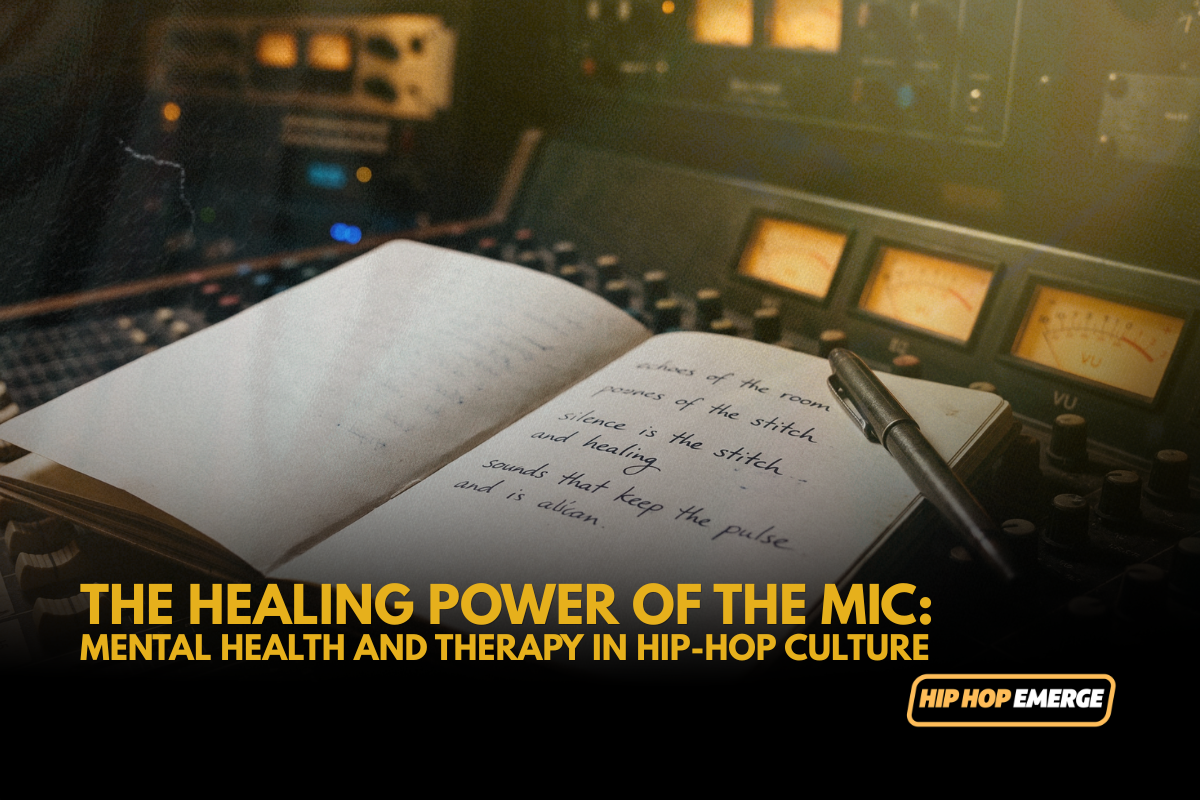
For decades, hip-hop operated as the primary, unfiltered news network for marginalized communities across America. From the aggressive social commentary of Public Enemy to the gritty street reporting of Mobb Deep,the genre provided a critical outlet for urban youth to document systemic neglect, economic anxiety, and daily survival. Yet, beneath the bravado and heavy basslines, hip-hop has always functioned as an improvised form of public therapy. Today, that informal coping mechanism is evolving into a formalized clinical movement.Mental health professionals, community organizers, and high-profile artists are actively utilizing hip-hop expression, specifically lyric writing, beat production, and studio recording, as a structured therapeutic intervention to treat complex trauma and destigmatize psychiatric care.
The intersection of hip-hop and mental wellness represents a profound shift in cultural priorities. Historically,the genre frequently glorified hyper-masculinity, emotional detachment, and substance abuse as necessary armor against hostile environments. Discussing depression, anxiety, or seeking professional therapy was largely considered taboo, dismissed as a sign of weakness in neighborhoods where vulnerability could invite danger. Over the past decade, however, the cultural narrative has radically transformed. As a generation of influential artists publicly confronted their own psychological battles, the surrounding community began to demand accessible, culturally competent mental health resources.
Understanding this critical evolution requires examining the movement through three distinct frameworks: the development of clinical hip-hop therapy models by licensed professionals, the establishment of therapeutic recording studios in marginalized neighborhoods, and the massive financial investments made by prominent artists to build independent mental health infrastructure.
By merging the rhythmic familiarity of rap music with evidence-based psychological treatment, advocates are creating a new blueprint for community healing. This approach acknowledges that traditional, clinical therapy settings often feel alienating or culturally disconnected to young people from urban environments.
Clinical Hip-Hop Therapy: A New Psychological Framework
The formal integration of hip-hop into psychiatric treatment is largely credited to pioneering social workers and psychologists who recognized the genre’s inherent narrative power. The concept of Hip-Hop Therapy was formally introduced in the late 1990s by Dr. Edgar Tyson, a clinical social worker who observed that traditional talk therapy consistently failed to engage at-risk youth. Tyson hypothesized that by incorporating the music his clients already consumed and trusted, he could establish a vital therapeutic alliance.
This clinical framework utilizes hip-hop elements to facilitate emotional processing. Rather than forcing clients into rigid conversational structures, therapists encourage them to write sixteen-bar verses detailing their personal trauma, anxieties, and aspirations. The process of structuring a rhyme requires cognitive organization, forcing the writer to process chaotic emotions into a cohesive narrative. Analyzing existing rap lyrics also provides a safe, indirect method for clients to discuss sensitive topics like systemic violence, grief,and family dysfunction without feeling directly interrogated.
Organizations like Beats Rhymes and Life in Oakland, California, have successfully scaled this model,employing licensed clinicians alongside professional hip-hop artists. Their programs prove that when psychological intervention speaks the cultural language of the patient, engagement rates soar, and treatment outcomes dramatically improve.
The Studio as a Sanctuary: Therapeutic Recording Environments
Beyond clinical offices, the physical environment of the recording studio is being reimagined as a safe haven for emotional recovery. For many young artists, the vocal booth operates as a modern confessional, an isolated, soundproofed space where vulnerability is not only accepted but creatively rewarded.
Community organizations are actively building accessible recording studios in under-resourced neighborhoods, specifically designed to function as youth wellness centers. In these spaces, the act of beat-making and audio engineering serves as a form of active meditation and emotional regulation. The repetitive,focused nature of programming drum sequences or chopping soul samples allows individuals to redirect anxiety and channel aggressive energy into constructive sonic architecture.
Furthermore, the collaborative nature of the recording process fosters crucial social support networks. When young people gather in a studio to review tracks and offer constructive feedback, they engage in peer-to-peer counseling. The studio environment strips away the clinical sterility of a traditional hospital waiting room,replacing it with a culturally affirming space where emotional processing feels natural and empowering.
Artist-Funded Infrastructure: Putting Capital Behind the Culture
The most visible acceleration of this movement stems from the direct financial involvement of high-profile hip-hop artists. Moving beyond simply rapping about their struggles, major figures are utilizing their massive capital leverage to build independent mental health infrastructure, specifically targeting the racial disparities in healthcare access.
Houston artist Megan Thee Stallion launched the Pete and Thomas Foundation, establishing a significant focus on providing mental health resources for women and marginalized communities. Her initiative directly subsidizes therapy costs and connects individuals with culturally competent care providers. Similarly, Detroit MC Big Sean established the Sean Anderson Foundation, which actively funds wellness programs and mental health awareness campaigns in public school systems.
Perhaps the most comprehensive institutional effort is the Mental Wealth Alliance, founded by media personality and cultural commentator Charlamagne Tha God. His organization operates with a massive,structural mandate: to provide free therapy to Black Americans, train a new generation of Black psychiatrists and therapists, and permanently erase the stigma surrounding mental illness in the culture.
These artist-led initiatives are vital because they bypass the bureaucratic delays of traditional government healthcare programs. By deploying independent capital, these figures provide immediate, tangible relief while simultaneously leveraging their immense celebrity influence to normalize psychiatric care.
A New Blueprint for Urban Wellness
The integration of hip-hop and mental health therapy represents one of the most important cultural developments of the modern era. It proves that the genre is not merely an entertainment product, but a highly adaptable, life-saving public health tool. By transforming the microphone into a therapeutic instrument, the culture is actively healing the specific traumas it was originally created to document.
For the next generation of urban youth, the message is clear: maintaining mental wellness is as essential to survival as lyrical dexterity or financial literacy. As clinical programs expand and artist-funded infrastructure grows, hip-hop is ensuring that the communities that built the culture will finally receive the care they deserve.
SOURCES:
The Principles of Hip-Hop Therapy and Dr. Edgar Tyson, American Psychological Association,
Beats, Rhymes and Life: Oakland’s Hip-Hop Therapy Model, KQED Arts,
The Pete and Thomas Foundation: Megan Thee Stallion’s Wellness Initiative, Official Foundation Portal,
The Mental Wealth Alliance: Destigmatizing Black Mental Health, Mental Wealth Alliance Official,