
The Next 50 Years: Where Is Hip-Hop Culture Headed Next?
A forward-looking analysis examining future shifts in global rap culture, virtual performance venues, direct-to-fan Web3 tokenization, and emerging international subgenres that redefine digital intellectual property.
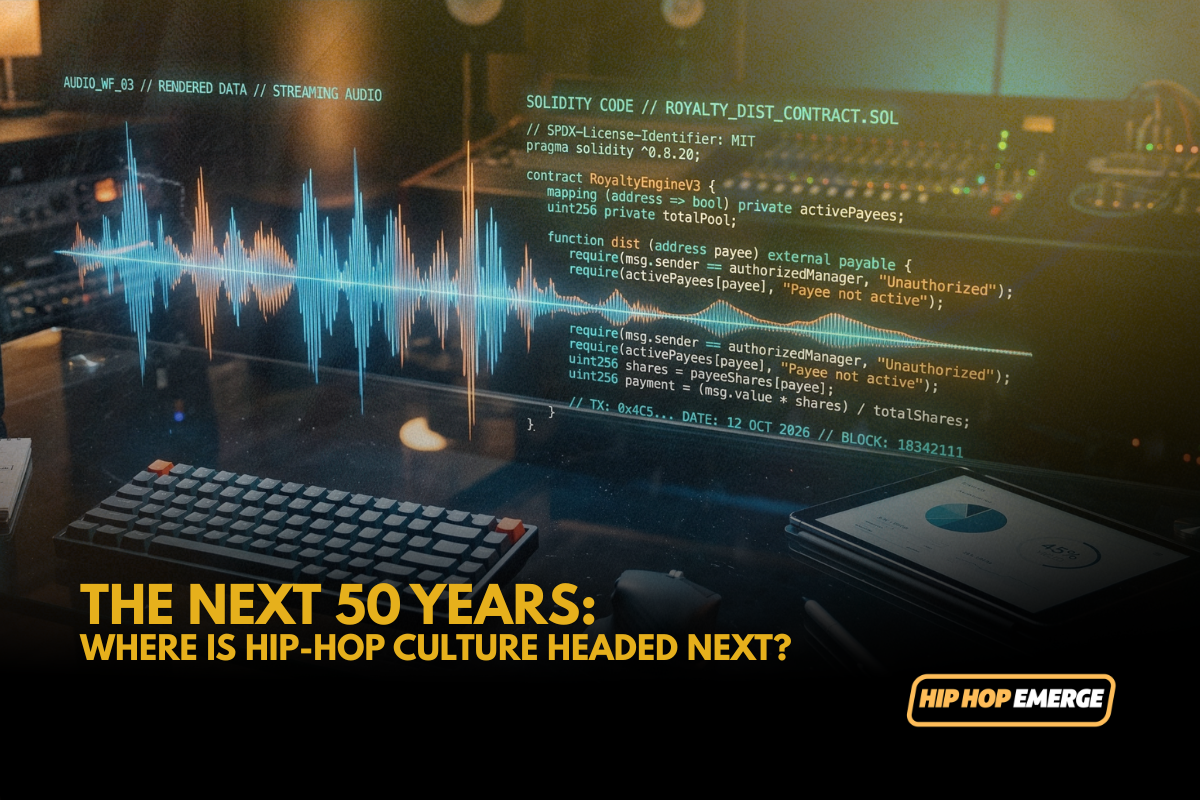
As hip-hop enters its second half-century of global dominance, the culture stands at the threshold of a profound technological and geographic evolution. What began in 1973 as a localized block party culture in the Bronx grew into a multi-billion-dollar global industry driven by physical record sales, arena tours, and traditional media broadcasting. However, the commercial mechanisms that governed music distribution and artist monetization over the last fifty years are rapidly giving way to decentralized digital ecosystems, immersive virtual environments, and cross-border subgenres that operate without traditional corporate gatekeepers.
Modern artists are redefining what it means to build a cultural enterprise. Rather than relying exclusively on physical concert venues or centralized streaming platforms that extract maximum platform fees, forward-thinking creators are building digital-first media ecosystems. By monetizing digital avatars, deploying blockchain-backed fractional royalty tokens, and collaborating across international soundscapes, the next generation of hip-hop founders is constructing a new blueprint for creative sovereignty.
The financial numbers driving this digital transition confirm that virtual spaces and direct-to-fan tokenization carry massive commercial potential. When Travis Scott partnered with Epic Games for his virtual Astronomical event inside Fortnite, the multi-day virtual concert grossed roughly $20 million, combining performance fees and digital merchandise sales. This milestone demonstrated that virtual venues can generate higher gross margins than traditional multi-city physical arena tours while reaching millions of global fans simultaneously.
Analyzing the future trajectory of hip-hop requires evaluating three primary innovation pillars: the economics of virtual performance venues, the rise of Web3 fractional royalty co-ownership, and the global expansion of regional subgenres like Amapiano, UK Drill, and Latin Trap. Understanding these forces provides essential guidance for entertainment executives, technology investors, and cultural architects.
Historically, expanding a recording artist’s global reach required extensive international travel, complex physical staging logistics, and heavy venue overhead costs. While physical live performance remains a vital emotional connection point between artists and fans, virtual entertainment platforms have unlocked unprecedented scalability, allowing artists to perform inside interactive digital worlds designed around their aesthetic vision.
Virtual Venues and the Economics of Digital Identity
To evaluate the economic viability of virtual performance spaces, one must examine how platforms like Fortnite, Roblox, and interactive metaverse venues monetize digital identity. This virtual entertainment economy rests upon five primary operational drivers that transform fan engagement.
First, virtual activations eliminate physical capacity limits, allowing millions of fans across different time zones to attend a single live event simultaneously without venue restrictions or security bottlenecks. Second, artists capture high-margin digital merchandise sales by releasing custom avatar skins, virtual apparel, exclusive emote animations, and digital accessories directly to player inventories.
Third, virtual concerts dramatically reduce production overhead compared to physical stadium tours. Without the expenses of regional freight transport, venue staging construction, or multi-city travel itineraries, virtual events deliver higher net profit margins directly back to artists and production teams.
Fourth, interactive gaming partnerships allow artists to premiere unreleased music inside immersive story worlds, turning song debuts into interactive global media events that generate millions of organic streams across digital platforms.
Fifth, virtual environments provide valuable direct-to-consumer behavioral data. Analyzing fan interaction inside virtual venues enables artist management teams to optimize future digital product drops, target regional tour markets, and design custom merchandise tailored to core fan preferences.
Web3 Music Platforms and Direct-to-Fan Fractional Co-Ownership
While virtual venues scale audience reach, decentralized Web3 music platforms are quietly restructuring how music royalties are funded, distributed, and owned. Web3 platforms like Sound.xyz, Royal, and Opulous utilize blockchain technology and smart contracts to offer direct-to-fan music tokenization, bypassing legacy record label intermediaries.
Through fractional royalty tokenization, artists can tokenize a percentage of a single track or an entire album’s future streaming royalties, selling digital ownership tokens directly to their core supporters. This model allows fans to become micro-investors who earn direct royalty payouts every time the song is streamed on global digital platforms.
For independent creators, fractional tokenization provides immediate, non-debt capital to fund recording sessions, marketing campaigns, and video production without surrendering master copyrights to traditional record labels. Fans receive a tangible financial stake in the artist’s success, creating a community of motivated brand advocates who actively promote the music to drive their own royalty yields.
Furthermore, self-executing smart contracts automate royalty splits instantly. Every time a tokenized track generates streaming income or is resold on secondary digital marketplaces, smart contracts distribute royalty percentages directly to the crypto wallets of artists, producers, and token holders without processing delays or middleman administration fees.
The Global Subgenre Explosion: Amapiano, Drill, and Cross-Border Fusion
Parallel to technological innovation, the sonic landscape of hip-hop is undergoing a radical geographic decentralization. The era of American hip-hop holding a monopoly on global rap style has given way to a multi-polar global ecosystem where international subgenres influence Western music production.
A prime example of this global expansion is Amapiano, the South African house and log-drum subgenre that has swept global music charts. Spotify streaming metrics document an explosive surge of over 5,600 percent for Amapiano between 2018 and 2023, accumulating over 1.4 billion streams. Crucially, more than 55 percent of Amapiano streams now originate outside the African continent, demonstrating massive crossover appeal across North America, Europe, and Asia.
Similarly, UK Drill, Latin Trap, and Asian hip-hop collectives have established independent commercial infrastructures. By fusing local dialects, regional traditional instrumentation, and heavy trap percussion, international creators build thriving regional music economies while collaborating directly with global rap stars.
This cross-border fusion creates new international touring circuits, brand endorsement deals, and festival partnerships. Western artists increasingly travel to Johannesburg, London, Tokyo, and Lagos to collaborate with regional producers, recognizing that global sonic innovation now resides in international creative capitals.
The Architecture of Future Cultural Sovereignty
The next fifty years of hip-hop will be defined by creators who master the intersection of technology, finance, and global culture. By embracing virtual performance spaces, direct-to-fan fractional ownership, and international soundscapes, future artists will secure absolute creative and financial independence.
As the boundaries between physical reality and digital identity continue to blur, hip-hop will maintain its historical role as the ultimate driver of global popular culture. The future belongs to the visionaries who build decentralized institutions, own their digital IP, and connect directly with a global community of empowered fans.
SOURCES:
Travis Scott Earned $20 Million for Fortnite Astronomical Concert Event, Forbes / GamesIndustry.biz, Music Tokenization and Web3 Royalty Ownership Models, BlockchainX Industry Report,
Sound.xyz Web3 Digital Music Platform and NFT Royalties, GetBlock Protocol Review,
Amapiano Streaming Growth Metrics and International Crossover, Chartlex Spotify Analysis,