
Closing the Wealth Gap: How the Paid In Full Foundation is Correcting Hip-Hop’s Historical Ledger
For over fifty years, hip-hop culture generated trillions of dollars in global commerce, transforming everything from international fashion to consumer technology. Yet, the foundational architects who built this massive economic engine, the early MCs, DJs, and producers from the 1970s and 1980s, were routinely systematically excluded from the financial rewards of their own creations. During…
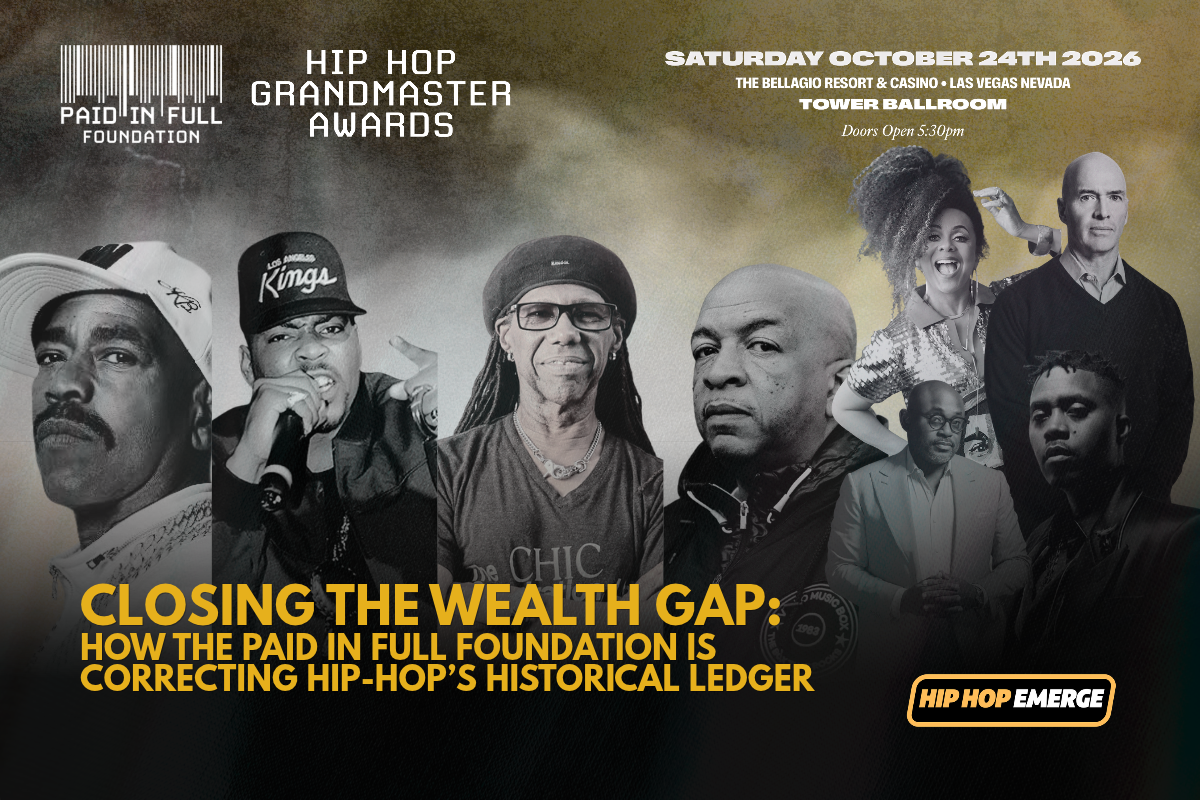
For over fifty years, hip-hop culture generated trillions of dollars in global commerce, transforming everything from international fashion to consumer technology. Yet, the foundational architects who built this massive economic engine, the early MCs, DJs, and producers from the 1970s and 1980s, were routinely systematically excluded from the financial rewards of their own creations. During the genre’s infancy, young artists signed notoriously predatory recording contracts, surrendering master ownership, publishing rights, and merchandising revenue to corporate intermediaries. Because the music industry historically refused to offer unionized protections, healthcare, or pensions to early rap artists, many cultural pioneers were left vulnerable as they aged, watching the culture they invented enrich multinational conglomerates while they struggled to secure their own financial stability.
The Paid In Full Foundation was established to directly dismantle this historic inequity. Conceived as a philanthropic and economic correction vehicle, the organization operates with a singular, powerful mission: to provide financial and social support to hip-hop pioneers whose creative contributions went unrewarded. By treating cultural contributions as equity deserving of retroactive compensation, the foundation functions as a form of industry reparations, ensuring that the founding generation receives the financial security and healthcare support they were wrongfully denied.
At the center of this initiative is the annual Hip-Hop Grandmaster Awards, an exclusive gala designed to honor legendary figures not just with symbolic trophies, but with substantial, life-altering financial grants. All net proceeds raised from these high-profile events go directly toward assisting these pioneers and funding educational initiatives that document the culture’s history. As the foundation prepares for its 2026 ceremony,the upcoming Hip-Hop Grandmaster Awards stand as a crucial institutional milestone for cultural preservation and economic justice.
Analyzing the structural impact of the Paid In Full Foundation requires examining three core dimensions of its operation: the specific meaning behind the Grandmaster grants, the coalition of founders and cultural advisors leading the initiative, and the profound legacy of the 2026 honorees receiving this year’s top honors.
The Mission: Financial Equity Over Symbolic Praise
The entertainment industry is saturated with award shows, lifetime achievement trophies, and hall-of-fame inductions. While public recognition holds cultural value, standard industry ceremonies rarely address the underlying economic disparities faced by aging artists. A platinum plaque or a televised tribute cannot pay for medical treatments, housing costs, or retirement planning.
The Paid In Full Foundation diverges from this traditional model by attaching significant, direct financial compensation to its honors. The Hip-Hop Grandmaster Awards operate on the premise that cultural architects were historically undercompensated, and this capital injection serves to correct that ledger. By framing the award as a financial grant rather than a mere accolade, the foundation shifts the conversation from passive admiration to active economic empowerment.
This approach acknowledges the harsh realities of the early record business. Before hip-hop proved its commercial viability, artists lacked legal representation and industry leverage. Independent labels frequently exploited this lack of infrastructure, utilizing accounting tactics that kept artists indefinitely in debt. The foundation’s financial grants provide retroactive liquidity, ensuring that pioneers can age with dignity, access necessary healthcare, and support their families without relying on unpredictable touring schedules.
Furthermore, the foundation explicitly rejects the narrative that struggling pioneers are to blame for their financial hardships. By recognizing the systemic nature of their exploitation, the organization restores honor to these artists, shifting the focus toward accountability and collective cultural responsibility.
The Architects: Building a Coalition of Capital and Culture
The creation and sustained success of the Paid In Full Foundation is the result of an unprecedented alliance between Silicon Valley venture capital, corporate marketing executives, and hip-hop royalty. This cross-sector coalition ensures that the foundation possesses both the immense financial resources required to issue large grants and the authentic cultural authority to identify deserving recipients.
The organization was spearheaded by Ben Horowitz, co-founder of the venture capital firm Andreessen Horowitz, alongside his wife Felicia Horowitz. Recognizing the wealth generated by technology platforms that rely heavily on hip-hop culture, the Horowitz family committed their resources to building a restorative economic vehicle. They were joined on the Board of Directors by legendary music executive and UnitedMasters founder Stephen J. Stoute, media leader Michelle Ebanks, and prolific producer Quincy Jones III.
Crucially, the foundation’s direction is guided by an advisory board comprising some of the most respected voices in hip-hop history. Queensbridge icon Nas serves as a primary advisor, utilizing his executive influence and deep historical knowledge to advocate for his predecessors. He is joined by cultural ambassador Fab 5 Freddy, Video Music Box creator Ralph McDaniels, and Quincy Jones III. This advisory board ensures that the selection process remains rooted in authentic street consensus rather than corporate metrics.
By combining venture capital scaling with rigorous cultural curation, this leadership team built an institutional model that operates outside the traditional constraints of the major label system. Their collective effort proves that those who profited from the global explosion of urban culture possess a moral obligation to protect its founders.
The 2026 Grandmaster Honorees: Recognizing Cultural Titans
Since its inaugural ceremony in 2023, which honored Rakim and Scarface, the Hip-Hop Grandmaster Awards have established a flawless track record of identifying essential cultural pillars. Subsequent years celebrated icons like Grandmaster Caz, Roxanne Shanté, Kool Moe Dee, Kool G Rap, and Grand Puba. As the foundation approaches its 2026 event, the incoming class of honorees represents a diverse cross-section of foundational brilliance.
First, legendary Harlem MC Kurtis Blow is recognized as a 2026 Hip-Hop Grandmaster Honoree. As the first rapper to sign with a major label and the first to achieve a certified gold record with “The Breaks,” Kurtis Blow shattered early commercial barriers. His induction celebrates not just his commercial milestones, but his visionary role in establishing hip-hop as a global touring force.
Second, Dallas-born, Los Angeles-based lyricist The D.O.C. receives the Hip-Hop Grandmaster Honor. Widely regarded as one of the most gifted writers in West Coast history, The D.O.C. played an indispensable, often uncredited role in shaping the lyrical identity of N.W.A, Eazy-E, and Dr. Dre. Following a tragic car accident that severed his vocal cords, his behind-the-scenes writing sustained the West Coast dominance of the 1990s.Honoring him acknowledges the invisible architectural work that built multi-platinum empires.
Third, the foundation presents the Quincy Jones Achievement Award to Nile Rodgers. As the driving force behind Chic, Rodgers composed the instrumental foundation for “Good Times,” which directly fueled the Sugarhill Gang’s “Rapper’s Delight”, the record that introduced hip-hop to global radio. Recognizing Rodgers highlights the undeniable sonic linkage between disco, funk, and the architectural loops that created early hip-hop production.
Finally, the Contributor Award Honoree is awarded to Ralph McDaniels, the legendary creator of Video Music Box. Decades before digital streaming and specialized cable networks, McDaniels provided the only visual broadcast platform for emerging New York MCs. His archive represents the most vital visual historical record of early hip-hop culture, making his recognition essential.
A Blueprint for Cultural Reparations
The Paid In Full Foundation represents a critical evolution in how the entertainment industry values its elders.For decades, the narrative surrounding aging artists focused on tragic outcomes and financial ruin. By stepping in with direct financial grants, comprehensive healthcare advocacy, and high-profile public celebration, the foundation rewrites the final chapters for these cultural architects.
For modern creatives building their own enterprises today, the existence of the Paid In Full Foundation offers a vital lesson in collective responsibility. The independence and massive leverage enjoyed by contemporary artists are built directly upon the uncompensated sacrifices of the generations that preceded them.
As the 2026 Hip-Hop Grandmaster Awards prepare to take center stage, the event serves as a powerful reminder of cultural duty. True equity is achieved when the community secures the financial dignity of those who laid the very first bricks.
SOURCES:
The Paid In Full Foundation Official Honorees and Mission, The Paid In Full Foundation,
Nas & Others Created a Foundation That Awards Money and Healthcare to Hip Hop Artists, Volume 82 Magazine,
https://fashionsizzle.com/2025/10/hip-hop-grandmaster-awards-a-night-of-legends-legacy-and-unforgettable-energy/