Public Parks, Global Sound: How SummerStage Preserves Hip Hop’s Free Public Access
An analysis of Capital One City Parks Foundation SummerStage’s multi-decade commitment to providing free, high-caliber hip-hop and R&B performances across New York City’s five boroughs.
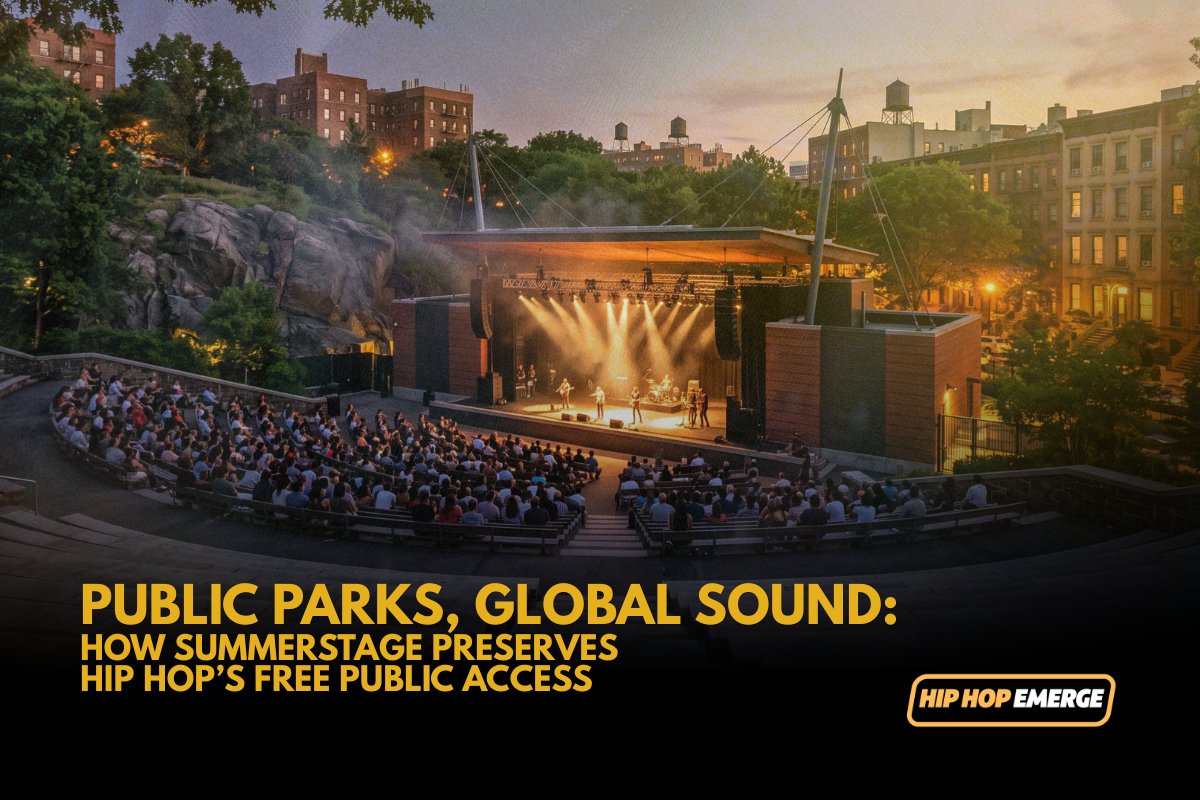
Since its founding in 1986, the Capital One City Parks Foundation SummerStage festival has stood as New York City’s premier outdoor performing arts institution. What began as a modest gathering at the Naumburg Bandshell in Central Park quickly expanded into a sprawling five-borough civic activation that transforms neighborhood green spaces into vibrant cultural sanctuaries. Over four decades of continuous summer programming, SummerStage has maintained an unwavering commitment to democratizing access to live performing arts, providing free, world-class concerts to millions of residents and visitors across New York City.
While commercial live event promoters have driven ticket prices for arena tours and multi-day music festivals to historic highs, SummerStage operates as a vital counterweight to live music inflation. By removing financial barriers to entry, the festival ensures that urban youth, working families, and long-time neighborhood residents can experience legendary hip-hop pioneers, R&B vocalists, and international recording artists without paying steep admission fees. This public access model preserves the grassroots spirit of hip-hop, returning the genre to the outdoor public parks where its founding DJ jams and block parties first originated.
The geographic footprint of SummerStage reflects a deliberate strategy of cultural equity and municipal investment. Beyond its flagship stage at Rumsey Playfield in Central Park, the festival installs professional concert infrastructure directly within historic neighborhood parks across all five boroughs, including Marcus Garvey Park in Harlem, Herbert Von King Park in Bed-Stuy, Crotona Park in the Bronx, Flushing Meadows-Corona Park in Queens, and Stapleton Waterfront Park in Staten Island. Bringing high-production concerts directly into residential neighborhoods validates local park spaces as essential centers of community life.
Analyzing the institutional impact of Capital One City Parks Foundation SummerStage reveals how non-profit cultural leadership and municipal alignment sustain urban public health. Examining SummerStage’s operational blueprint offers crucial lessons in democratized arts access, public safety collaboration, and community wellness.
Understanding SummerStage’s four-decade legacy requires evaluating three primary operational dimensions: the expansive five-borough civic footprint, the democratized access model for urban youth, and the strategic municipal partnerships that support community safety and creative education.
The Five-Borough Civic Footprint and Park Activation
To appreciate the scale of SummerStage, one must examine how City Parks Foundation transforms neighborhood public parks into temporary outdoor performance halls. Rather than concentrating resources exclusively in Manhattan, SummerStage distributes its programming across historically significant cultural neighborhoods.
First, the festival honors Harlem’s artistic legacy through annual programming at Marcus Garvey Park. Nestled beneath the historic Harlem Fire Watchtower, the park’s Richard Rodgers Amphitheater hosts soulful R&B reviews, jazz showcases, and hip-hop anniversaries that draw thousands of neighborhood residents into shared celebration.
Second, SummerStage reinforces Brooklyn’s vibrant music ecosystem with multi-day activations at Herbert Von King Park in Bedford-Stuyvesant and the Coney Island Amphitheater. Hosting grassroots hip-hop festivals like MIKE’s Young World alongside veteran R&B reviews, these park concerts foster deep intergenerational connections among local music lovers.
Third, the festival celebrates the Bronx as the birthplace of hip-hop through energetic park jams in Crotona Park. Featuring legendary hip-hop DJs, park jams, and classic rap showcases, Crotona Park activations reconnect local youth with the original culture created in their own backyards.
Fourth, SummerStage activates Flushing Meadows-Corona Park in Queens and Tompkins Square Park in the East Village, blending international global soundscapes, Latin trap, and classic hip-hop to reflect the rich linguistic diversity of New York City’s residential neighborhoods.
Democratized Access: Removing Financial Barriers for Urban Youth
The commercial live music landscape in major metropolitan markets is increasingly characterized by price gouging, corporate service charges, and exclusive VIP tiers that priced out average working-class families. SummerStage directly counters this commercial exclusion by offering over eighty percent of its seasonal performance schedule completely free of charge.
Providing free admission to high-caliber live performances is essential for youth development and cultural literacy. For thousands of young New Yorkers, a SummerStage park concert represents their very first exposure to professional live instrumentation, stage production, and legendary recording artists. Experiencing world-class musicianship in an open, welcoming environment sparks creative ambitions and nurtures the next generation of visual and musical creators.
Furthermore, SummerStage’s lineup curation pairs golden-era rap legends with rising underground innovators on the same stage. Iconic performers like De La Soul, Pete Rock, Rakim, Doug E. Fresh, and Slick Rick share schedules with emerging independent artists, creating a multi-generational dialogue that preserves hip-hop’s rich historical continuum.
This democratized access model creates a welcoming civic sanctuary where diverse audiences gather across ethnic, generational, and economic lines. In an increasingly segmented digital society, free public park concerts provide rare opportunities for collective joy and authentic human connection.
Municipal Partnerships, Public Safety, and Community Wellness
Operating a citywide festival across dozens of public parks requires sophisticated municipal coordination and cross-agency collaboration. City Parks Foundation works in close partnership with the New York City Department of Parks & Recreation, local community boards, and civic leadership to ensure that every event is safe, accessible, and well-maintained.
These municipal partnerships extend directly into public health, youth sports, and environmental education programs. Revenue generated from a small number of ticketed Central Park benefit concerts directly subsidizes free youth sports clinics, environmental education workshops, and puppet theater performances in under-resourced neighborhood parks throughout the year.
In addition, SummerStage collaborates with local community organizations to promote neighborhood safety and physical wellness. By converting public park spaces into well-lit, positive community gatherings during summer evenings, the festival actively contributes to neighborhood violence reduction and community cohesion.
Local food vendors, neighborhood small businesses, and regional artisans also benefit from the foot traffic generated by park concerts. Surrounding commercial corridors experience increased retail spending on concert nights, demonstrating that free public park activations serve as effective local economic engines.
The Imperative of Public Cultural Stewardship
The enduring success of Capital One City Parks Foundation SummerStage underscores a fundamental truth about urban life: public parks and accessible arts programming are essential infrastructure for public well-being. By preserving free access to live hip-hop, R&B, and global music, SummerStage safeguards the cultural soul of New York City.
For civic leaders, arts administrators, and cultural advocates worldwide, SummerStage provides an inspiring operational blueprint. True cultural stewardship requires defending public spaces, removing financial barriers, and ensuring that the arts remain an accessible birthright for every member of the community.
As hip-hop continues its global evolution, SummerStage ensures that the genre remains grounded in its public park roots. By uniting world-class performance, municipal alignment, and neighborhood fellowship under the summer sky, City Parks Foundation proves that the transformative power of live music belongs to everyone.
SOURCES:
City Parks Foundation Official SummerStage Overview, City Parks Foundation,
Capital One City Parks Foundation SummerStage 2026 Lineup Announcement, BrooklynVegan,
SummerStage Central Park Rumsey Playfield Venue and Programs, AXS Venue Directory,
SummerStage Free Concert Series Kicks Off Across Five Boroughs, CBS New York,