
The Shaolin Empire: How Wu-Tang Clan Built an Unbreakable Global Brand
Examining Wu-Tang Clan’s revolutionary nine-member individual signing strategy, martial arts philosophy, and international brand leverage that created a multi-decade global cultural ecosystem.
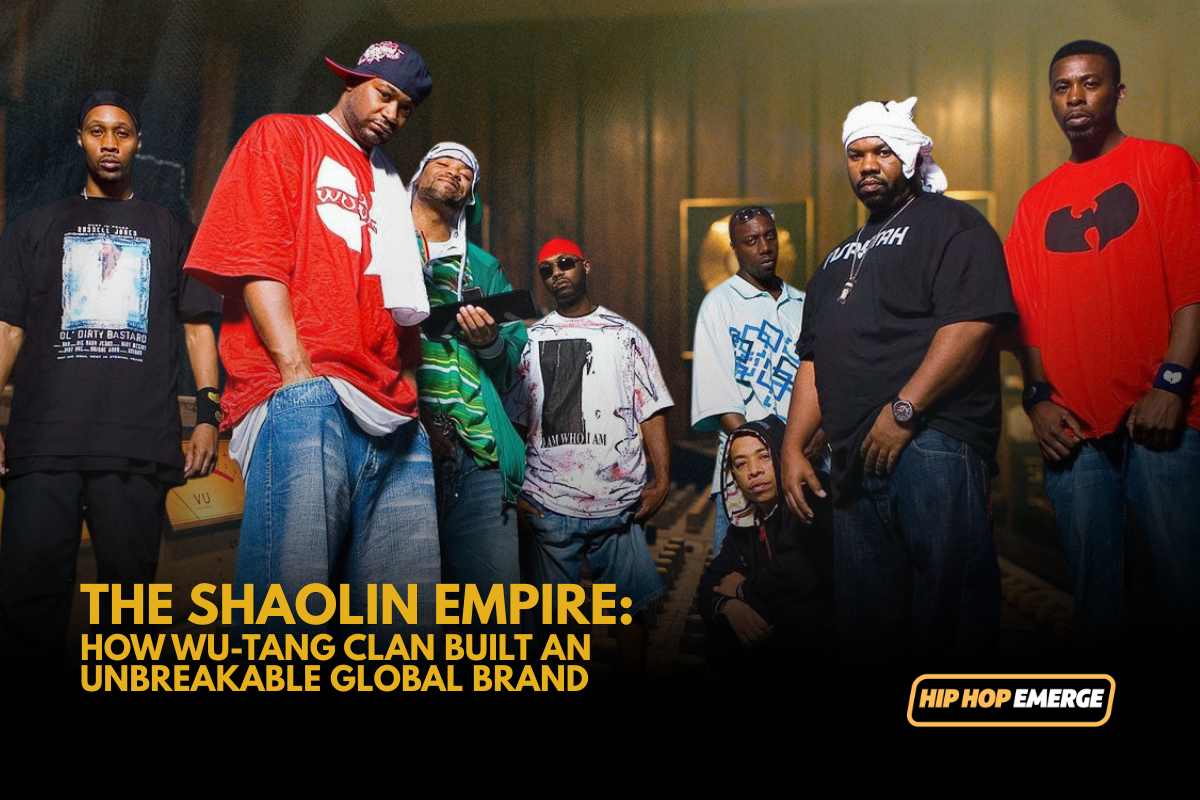
When Staten Island collective Wu-Tang Clan burst onto the music scene in 1993 with their seminal debut album Enter the Wu-Tang (36 Chambers), the hip-hop landscape was dominated by major label dominance and restrictive single-entity contracts. Formed by Robert “RZA” Diggs alongside GZA, Ol’ Dirty Bastard, Method Man, Raekwon, Ghostface Killah, Inspectah Deck, U-God, and Masta Killa, the nine-member group faced incredible odds. Rather than accepting standard label terms that bound all members exclusively to one corporate entity, RZA executed an unprecedented five-year master business plan that fundamentally altered music contract negotiations forever.
RZA’s revolutionary strategy centered on signing the collective to Loud Records for group releases while preserving total freedom for each individual member to negotiate solo recording contracts with competing major record labels. This non-exclusive group deal allowed Method Man to sign with Def Jam, Ol’ Dirty Bastard with Elektra, GZA with Geffen, and Raekwon with RCA/Loud. By infiltrating every major music conglomerate simultaneously, Wu-Tang Clan flooded the market with interconnected solo masterpieces, creating an unstoppable corporate ecosystem that multiplied the group’s global footprint.
Beyond contract architecture, Wu-Tang Clan transformed hip-hop branding through specialized apparel, martial arts philosophy, and high-art intellectual property monetization. Launching Wu-Wear in 1995 under the direction of Ollie “Power” Grant, the group built one of the earliest hip-hop clothing lines to scale internationally into high-street retail stores, generating tens of millions in annual revenue. Decades later, the group broke new ground in the art world by producing a single-copy album, Once Upon a Time in Shaolin, which sold at auction for $2 million, establishing hip-hop compositions as high-value fine art.
Analyzing the Wu-Tang Clan enterprise reveals how visionary leadership and structural innovation can build an unbreakable global brand. Deconstructing their corporate journey offers essential lessons in non-exclusive licensing, cross-industry monetization, and catalog sovereignty.
Understanding the endurance of the Shaolin empire requires evaluating three primary operational pillars: RZA’s non-exclusive five-year contract architecture, the global expansion of Wu-Wear lifestyle apparel, and the fine-art monetization model of Once Upon a Time in Shaolin.
RZA’s Five-Year Plan: Non-Exclusive Contract Architecture
To appreciate the genius of RZA’s initial business model, one must examine how standard 1990s recording contracts functioned. Major labels routinely bound multi-member groups to exclusive long-term deals that restricted individual side projects, captured maximum master royalty margins, and prevented members from negotiating external deals.
First, RZA negotiated a non-exclusive group contract with Steve Rifkind at Loud Records. Loud received group distribution rights for Wu-Tang Clan releases, but the contract explicitly granted all nine members the legal right to sign solo deals with any record label in the world.
Second, this decentralized structure created a competitive bidding environment among rival major labels. As individual members released critically acclaimed solo projects like Method Man’s Tical, Raekwon’s Only Built 4 Cuban Linx…, and GZA’s Liquid Swords, each major label spent millions promoting a individual Wu-Tang Member, effectively financing the global promotion of the overarching Wu-Tang brand at zero cost to the group.
Third, RZA retained executive producer control across the solo projects, ensuring sonic consistency, cross-promotional guest appearances, and centralized publishing alignment. Every solo release functioned as an advertisement for the main group, driving back-catalog sales across all participating labels.
Fourth, this contractual web provided unprecedented leverage during royalty renegotiations. Because the group was not dependent on a single label’s financial backing, Wu-Tang Clan commanded high royalty percentages and retain control over their intellectual property.
Wu-Wear and the Global Expansion of Hip-Hop Apparel
Parallel to their musical takeover, Wu-Tang Clan recognized that their iconic “W” logo, designed by DJ Mathematics, possessed immense lifestyle branding potential. In 1995, group partner Ollie “Power” Grant established Wu-Wear, turning street apparel into an international retail phenomenon.
Rather than relying on basic promotional t-shirts sold exclusively at concert venues, Wu-Wear launched as a fully fledged high-street apparel brand. The company designed custom denim, leather jackets, graphic hoodies, and athletic footwear, opening dedicated flagship retail boutiques in New York, Los Angeles, Atlanta, and Norfolk.
Furthermore, Wu-Wear achieved major international distribution, licensing its apparel to department stores and urban boutiques across Europe, Asia, and Latin America. The brand generated over $25 million in annual wholesale revenue at its peak, proving that hip-hop lifestyle branding could compete directly with established global sportswear giants.
This merchandise sovereignty laid the groundwork for modern streetwear brand extensions. By maintaining ownership over their apparel licensing, Wu-Tang Clan proved that music acts could build independent lifestyle enterprises that operate far past traditional record sales.
Once Upon a Time in Shaolin: Hip-Hop as High-Value Fine Art
In 2014, Wu-Tang Clan executed a conceptual masterstroke that challenged the devaluation of digital music in the streaming era. Conceived by producer Cilvaringz and RZA, the group spent six years secretly recording a double album titled Once Upon a Time in Shaolin, producing only a single physical copy encased in a hand-carved nickel and silver box.
The group positioned the physical album not as a commercial consumer product, but as a singular piece of fine art comparable to a Renaissance painting or a historic sculpture. The album was placed in a vault in Morocco before being auctioned through Paddles8 in 2015.
The single-copy album sold for $2 million to pharmaceutical executive Martin Shkreli, making it the most expensive single musical recording ever sold. The sale contract included a strict legal condition prohibiting commercial duplication or public release for 88 years, though the owner retained the right to play the album at private listening gatherings and educational exhibitions.
Following federal asset forfeiture proceedings, the album was acquired by digital art collective PleasrDAO in 2021 for $4.75 million. The transaction validated RZA’s thesis: by applying artificial physical scarcity to digital sound, music can command fine-art valuations within international auction houses.
The Unbreakable Legacy of the Shaolin Ecosystem
Over three decades after their initial arrival, Wu-Tang Clan stands as a monumental proof of strategic independence and cultural vision. By combining Eastern martial arts philosophy, street lyricism, non-exclusive contract structure, and lifestyle branding, the group created a resilient brand identity that spans generations.
For modern creative founders, Wu-Tang Clan provides a definitive playbook for enterprise building. Intellectual property achieves its highest value when founders retain non-exclusive flexibility, diversify into physical products, and elevate their art into luxury asset classes.
The Shaolin empire continues to thrive across television series, video games, symphonic tours, and global museum exhibitions. By daring to rewrite the rules of the music industry in 1993, RZA and the Wu-Tang Clan proved that when artists own their narrative and business structure, they build an unbreakable legacy that endures forever.
SOURCES:
RZA’s 5-Year Master Business Plan for Wu-Tang Clan, Forbes Business Review,
The History of Wu-Wear and Early Hip Hop Apparel Sovereignty, Complex Style,
Once Upon a Time in Shaolin $2 Million Auction Sale to PleasrDAO, Rolling Stone Fine Art,
Loud Records and Steve Rifkind’s Non-Exclusive Deal with Wu-Tang, Billboard Retrospective,